Maybe you noticed that our store allows you to download some of our beats, or maybe you have already downloaded a few. And that brings up a simple question. Why do we offer free downloads in the first place?
The truth is that besides producing, I also write my own songs. And like many artists, I go through phases where I want to find beats from other producers and license them for my own music.
But something always frustrates me. Most producers do not allow downloads on their beats.
I understand why they do it, but it creates a real problem.
How am I supposed to know if a beat will inspire a good song if I cannot record a demo over it?
And even more than that, how can I decide to buy or license a beat without first knowing if my ideas actually work on it?
Because I prefer recording straight into my DAW, I often found myself pulling audio from YouTube just to test ideas.
It works, but it is tedious, impractical and a complete waste of time.
At the end of the day, no artist should have to buy a beat blindly
So that is exactly why I allow downloads in my store.
I want you to be able to grab the beat, write your ideas, record your demo and truly see if it works before making any decisions.
Just like I do when I look for beats for my own music.
So what can you actually do with these downloads?
You can record demos, explore melodies, try vocal ideas, share drafts privately with your team, check the key with your voice and see if the beat sparks a real song.
A download is simply a creative tool.
It lets you work freely before committing to a license.
What you cannot do with a download
Even though downloads are available, releasing a song still requires a license.
A download does not allow you to:
• Upload your song to Spotify or Apple Music
• Upload your song to YouTube
• Monetize your song on any platform
• Use the beat in your music videos
• Perform your song publicly or commercially
• Use the beat for any release, promotion or distribution of your song
A download is not a license.
It is only the first step in the creative process.
What FREE actually means in the beat world
If you search for beats on YouTube, you will see endless titles like this:
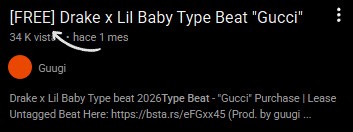
At first glance, it looks like producers are giving away their beats.
But in reality, “free” almost never means free to release.
Most of the time, it means:
• free to download
• free to try
• free to record demos
But not free to publish or monetize.
The word “free” is mainly a marketing strategy.
It helps videos rank, but it often misleads artists.
Cap Cort uses it too. But unlike most, I tell you exactly what it means before you build a song around the beat.
The real risk behind “free beats”
This is where things can get dangerous.
Many artists create full songs using these so called free beats. They record, mix, upload to platforms, shoot videos, invest in promotion… everything seems fine.
And then, suddenly, the song gets claimed.
Blocked.
Removed from every platform.
And that is the easiest outcome.
When a song starts growing, the producer who owns the beat can:
• remove the song permanently
• file copyright claims
• collect all royalties
• or pursue legal action if necessary
And saying “But it said free beat” does not protect the artist.
The phrase has no legal meaning.
The “non profit” misunderstanding
Another common confusion is thinking non profit means “I can upload this anywhere as long as I do not make money.”
But uploading to Spotify, Apple Music, YouTube, TikTok or Instagram is already considered commercial use.
Even if you are not earning anything, the platforms still monetize your upload.
To copyright systems, publishing is publishing.
Whether it makes money or not does not change the legal reality.
Why this system benefits everyone
My goal is simple.
I want artists to create freely.
To write demos, explore ideas, and understand the beat before making a decision.
And once you find something real, you can license the beat and release your music safely and professionally.
Article written by Miguel Cort